Chart Setups That Improve Reaction Time in Fast Markets
Fast markets punish indecisiveness in ways that feel disproportionate, and the hesitation that causes the greatest losses is rarely rooted in uncertainty about market direction. It is a product of mechanical friction, of simply not being prepared: a chart that must be reconfigured, a level that was never marked, a position size that must be calculated under the pressure of a moving market instead of determined before the session begins. Traders who perform reliably under fast market conditions have almost always completed most of their analytical work before those conditions arrive, establishing a state of readiness that transforms fast market conditions from a source of stress into a source of opportunity.
Pre-session preparation builds the structural framework that fast market execution depends on entirely. Marking significant levels before the session opens, identifying where the most meaningful price responses are likely, and defining what response each situation would call for transforms the session into an exercise in reacting to anticipated scenarios rather than constructing responses to unforeseen ones. Preparation does not eliminate surprise, but it substantially narrows the range of conditions that require real-time analytical construction, and that is precisely the type of cognitive load that degrades most severely when markets begin moving quickly and the psychological burden of open positions compounds the difficulty of clear thinking. TradingView charts support this preparation process by allowing traders to mark levels, annotate scenarios, and save fully configured layouts before the session begins, so that the analytical work is embedded in the chart itself rather than carried in memory under pressure.
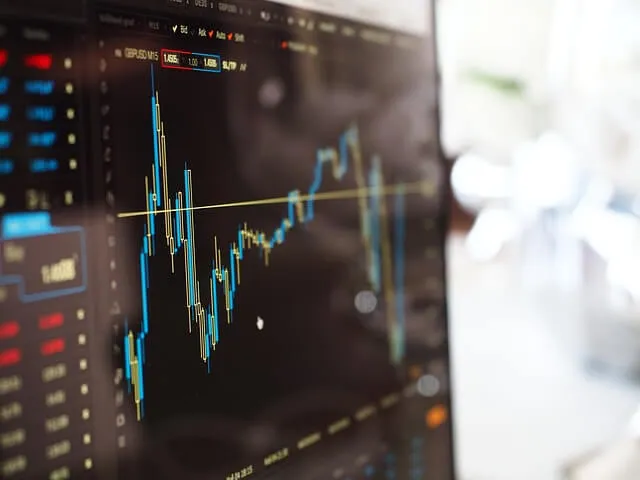
Image Source: Pixabay
The visual hierarchy of the chart layout determines how quickly the eye locates the most critical information during fast price action. A chart where the most important structural levels are immediately visible without needing to be searched for, and where key indicators occupy fixed positions that spatial memory can locate without engaging the conscious search processes required to scan an unfamiliar layout, performs differently under pressure than one assembled without that intentionality. Building that hierarchy deliberately rather than allowing it to develop through habit creates a layout designed for speed rather than one that merely happens to contain the right information in a structure never intended for rapid access.
Alert systems extend effective reaction time by notifying the trader when price reaches a significant level rather than requiring constant monitoring. An alert gives a trader thirty seconds to a minute of preparation time before price actually reaches the area of interest, during which the relevant chart can be brought into focus, the anticipated scenario reviewed, and the intended response mentally confirmed before action is required. That preparation window, made possible by the alert rather than by constant visual attention, means that the moment of execution arrives with a response already formed rather than requiring one to be constructed precisely when cognitive resources are most depleted. TradingView charts provide a flexible alert system that allows traders to set notifications on specific price levels, indicator conditions, or drawing tool intersections, ensuring that the preparation window is triggered by the market itself rather than dependent on the trader’s continuous presence at the screen.
Preparing order entry parameters removes the most time-sensitive element of rapid market execution from the domain of real-time decision making. Traders who have calculated position size, identified their stop level, and confirmed their target in advance have no calculations left to perform when price moves into their intended entry zone, since they have already confirmed that the scenario they anticipated is playing out as expected. That advance preparation is what separates entering at a planned price with a fully formed trade strategy from chasing an entry that has already moved past the optimal level because the preparation that should have preceded the move was attempted simultaneously with it.
A decision tree built through scenario planning that covers the two or three most probable outcomes for a given session or setup can be activated under fast market conditions rather than constructed in real time. A trader who has considered both the breakout scenario and the false breakout scenario arrives at the decision point with a prepared response to each outcome rather than having to simultaneously identify which scenario is unfolding and determine how to react to it. That separation of analytical work from execution work is the structural advantage that preparation produces, and it matters most precisely in the fast market conditions where analytical and execution demands would otherwise compete for the same limited cognitive resources at the moment both are most intense.

Comments